
← Soil: cultivation and preparation
H02-04 · Module 4 of 7 · Pages: 19 · Worksheets: 5
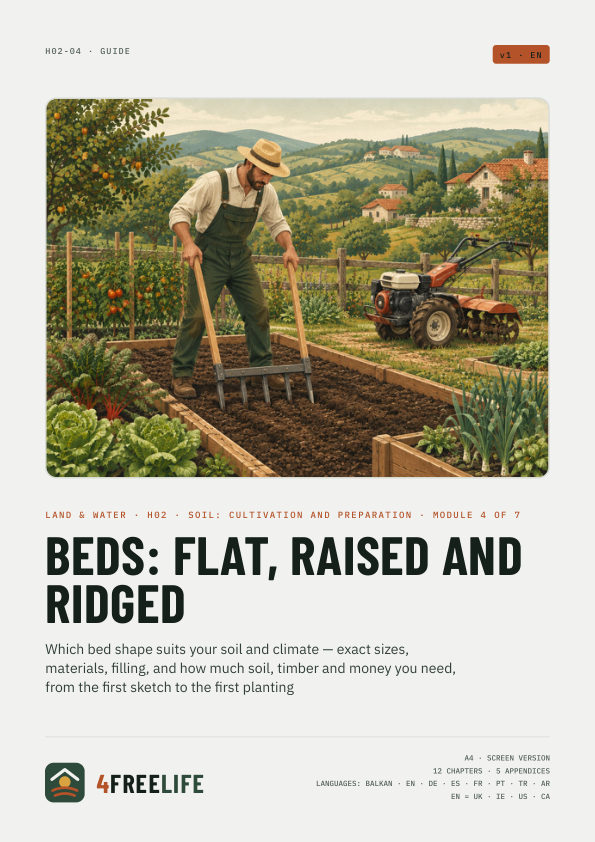
Beds: flat, raised and ridged
Which bed shape suits your soil and climate — exact sizes, materials, filling, and how much soil, timber and money you need, from the first sketch to the first planting
€9
Secure checkout with Stripe · VAT included · The PDFs are in the language of this page.
Whole series: Soil: cultivation and preparation, €39
In short
- Beds 1.0–1.2 m (about 4 ft) wide, so you can reach the middle from both sides; paths 30–50 cm, and 60 cm for a wheelbarrow.
- Wet and shallow soil: raised beds. Dry and hot: flat or sunken beds with mulch.
- A raised bed 20–30 cm (8–12 in) high is enough for almost all vegetables; 70–90 cm for working without bending.
- Don't use old railway sleepers, timber treated with an unknown preservative or painted boards.
- Beds are never walked on. Everything you do, you do from the path.
What's inside
Chapters
- Which shape for your soil and climate
- Sizes and layout
- Flat permanent beds
- Raised beds without sides
- Raised beds with sides
- Sunken beds for dry climates
- Ridges, furrows and potato beds
- Wood-core mounds
- Paths and edges
- The bed as a workplace
- Common mistakes
- Printable checklist
Worksheets
- Garden plan on a grid
- Soil, compost and timber calculator
- Bed log
- Shopping list for beds
- Bed calendar
Fields and checkboxes can be filled in with Adobe Acrobat Reader (desktop and mobile), and the calculator adds up by itself. Filling in may not work in some browsers. A print version comes with the screen PDF.
This guide in other languages: