
← The polytunnel
H11-06 · Module 6 of 7 · Pages: 21 · Worksheets: 6
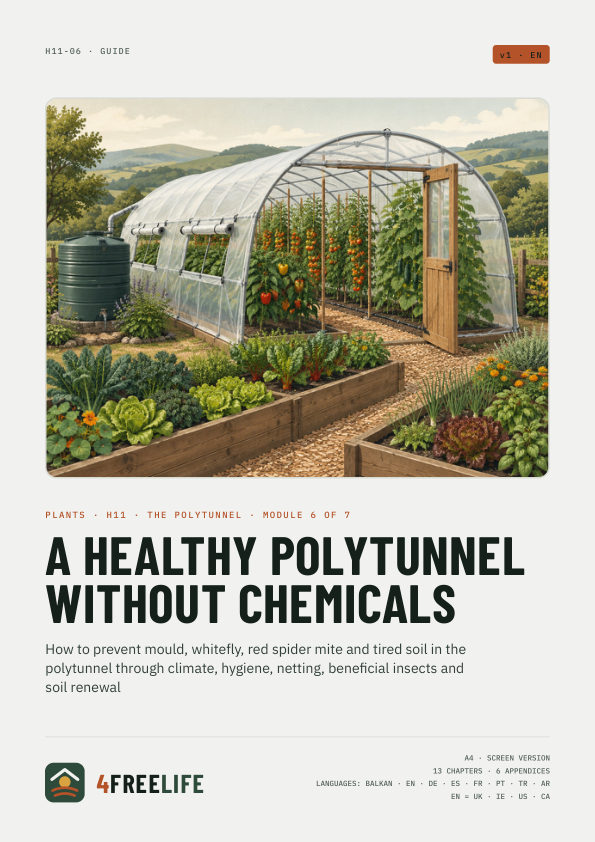
A healthy polytunnel without chemicals
How to prevent mould, whitefly, red spider mite and tired soil in the polytunnel through climate, hygiene, netting, beneficial insects and soil renewal
Secure checkout with Stripe · VAT included · The PDFs are in the language of this page.
Whole series: The polytunnel, €39
In short
- Humidity is cause number one: a leaf that stays wet for 6–8 hours invites mould. Ventilate in the morning, water in the morning and at the roots.
- Yellow sticky traps reveal whitefly, thrips and aphids before you see them on the plants.
- Beneficial insects work better in a closed tunnel than anywhere else; bring them in early and spray nothing.
- Soil gets tired: rotation, compost, solarisation or grafted plants.
- A 15-minute walk-round every week is the strongest protection: a problem caught early is a small problem.
What's inside
Chapters
- Why a tunnel gets sick
- Climate is the first protection
- Identifying diseases
- Identifying pests
- Physiological problems: not a disease
- Barriers and traps
- Beneficial insects in the tunnel
- Soil: tiredness, nematodes, solarisation
- Sprays: what is allowed and safe
- Hygiene and quarantine
- Response plan
- Most common mistakes
- Printable checklist
Worksheets
- Weekly inspection
- Problem log
- Risk calendar
- Trap and soil renewal calculator
- Trap and beneficials plan
- Contacts for tunnel health
Fields and checkboxes can be filled in with Adobe Acrobat Reader (desktop and mobile), and the calculator adds up by itself. Filling in may not work in some browsers. A print version comes with the screen PDF.
This guide in other languages: