
← Forage and pasture
H15-04 · Module 4 of 7 · Pages: 19 · Worksheets: 6
Lucerne and clovers
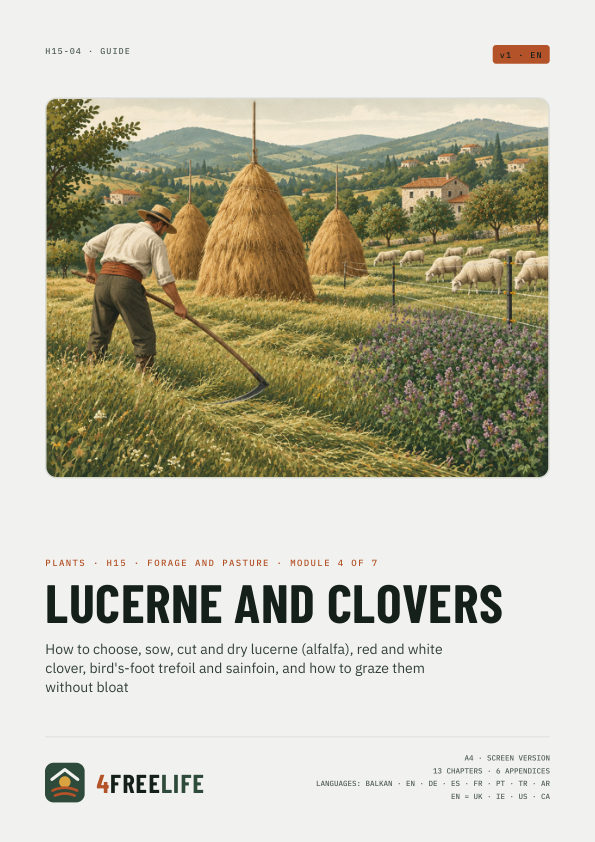
How to choose, sow, cut and dry lucerne (alfalfa), red and white clover, bird's-foot trefoil and sainfoin, and how to graze them without bloat
Secure checkout with Stripe · VAT included · The PDFs are in the language of this page.
Whole series: Forage and pasture, €39
In short
- Lucerne needs pH 6.5–7.5 and free-draining soil; on acid or wet soil red clover or bird's-foot trefoil does better.
- Sow lucerne at 2 g/m² (20 kg/ha, 18 lb per acre), shallow at 1–2 cm (½ in), in April–May or from mid-July to early August.
- Cut at early flowering, every 30–40 days; the last cut 4–6 weeks before the first frost.
- When drying, the leaf is the most valuable part: turn while it's still a little damp with dew.
- Bloat: never put hungry animals on young, wet lucerne or clover; 7–10 days to switch over, hay before grazing.
- Buy only certified seed, because of dodder.
What's inside
Chapters
- Why legumes
- Which species for your soil
- Soil and preparation
- Sowing
- The first year
- Cutting and cuts
- Drying lucerne and clover
- Grazing without bloat
- Annual mixtures for green fodder
- Dodder, pests and diseases
- Rotation after lucerne
- Common mistakes
- Printable checklist
Worksheets
- Seed and lime calculator
- Lucerne per animal
- Cutting log
- Field plan and rotation
- Buying seed and cost sheet
- Lucerne and clover calendar
Fields and checkboxes can be filled in with Adobe Acrobat Reader (desktop and mobile), and the calculator adds up by itself. Filling in may not work in some browsers. A print version comes with the screen PDF.
This guide in other languages: