
← Sheep
H26-01 · Module 1 of 7 · Pages: 22 · Worksheets: 5
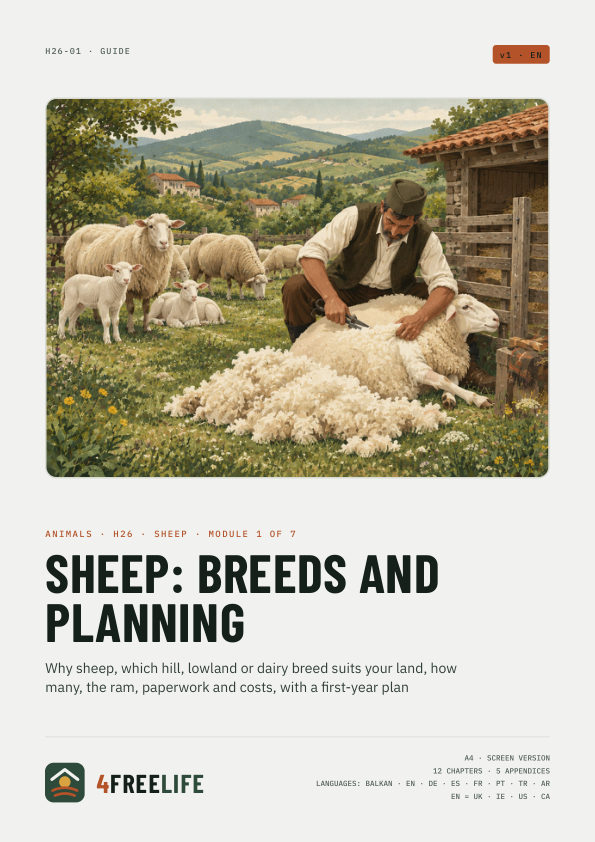
Sheep: breeds and planning
Why sheep, which hill, lowland or dairy breed suits your land, how many, the ram, paperwork and costs, with a first-year plan
€9
Secure checkout with Stripe · VAT included · The PDFs are in the language of this page.
Whole series: Sheep, €39
In short
- A sheep never lives alone. Keep at least 3, because sheep are flock animals and a lone sheep suffers, bleats and escapes.
- Allow 1,200 m² of grazing and hay ground per ewe (about a third of an acre), 350 kg of hay for winter, 5 L of water a day and 1 hour of work a week per head.
- Native hill breeds are thrifty and hardy but give less meat and milk. Commercial and dairy breeds need better feed.
- Buy only sheep with official ear tags and a movement document, from a flock with a known health history and a vet who knows it.
- Loose dogs (and coyotes in North America) are the biggest danger to a small flock. Plan a night pen and fencing before the first ewe arrives.
- Before the first sheep, get your holding number (CPH in the UK, flock number in Ireland, premises ID in the US and Canada) and check with the competent authority what else is compulsory.
What's inside
Chapters
- What you want from sheep
- Breeds for your land
- How many sheep
- The ram: your own, borrowed or AI
- Buying: from whom and what sheep
- Space, time and neighbours
- Paperwork and duties
- Sheep in the homestead loop
- Costs and returns
- The first-year plan
- Common mistakes
- Printable checklist
Worksheets
- Flock calculator
- Start-up costs
- Comparing sheep and sellers
- Flock register
- The shepherd's calendar
Fields and checkboxes can be filled in with Adobe Acrobat Reader (desktop and mobile), and the calculator adds up by itself. Filling in may not work in some browsers. A print version comes with the screen PDF.
This guide in other languages: