
← Sheep
H26-06 · Module 6 of 7 · Pages: 22 · Worksheets: 6
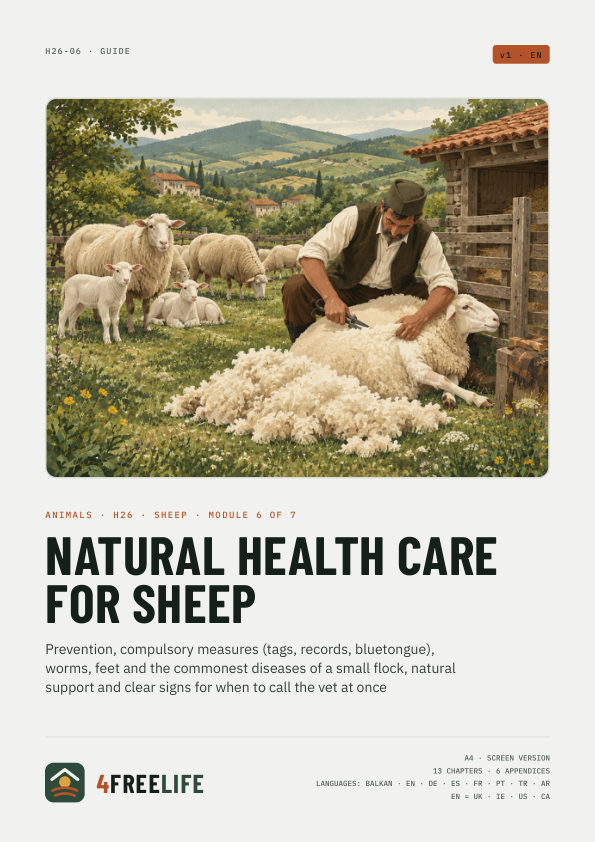
Natural health care for sheep
Prevention, compulsory measures (tags, records, bluetongue), worms, feet and the commonest diseases of a small flock, natural support and clear signs for when to call the vet at once
Secure checkout with Stripe · VAT included · The PDFs are in the language of this page.
Whole series: Sheep, €39
In short
- Count the sheep every morning and look at who lags behind, isn't eating or chewing the cud, is lame or is rubbing.
- A sheep's normal temperature is roughly 38.5–39.5 °C (101–103 °F); above 40.5 °C or below 38 °C call the vet.
- Compulsory: registration and ear tags, movement and medicine records, bluetongue measures where they apply, and reporting notifiable diseases. Check with the competent authority in your country.
- Worms are treated according to faecal egg counts and FAMACHA, not "everyone twice a year".
- Medicines only through a vet, and the withdrawal period for meat and milk is recorded and kept to.
- A dog with sheep is wormed against tapeworm at least every 3 months (every 4–6 weeks around slaughter and carcasses) and never eats raw offal (hydatid disease).
What's inside
Chapters
- Prevention before cure
- A healthy sheep and a sick one
- When to call the vet at once
- Compulsory measures: tags, records, bluetongue
- Sheep diseases that pass to people
- Vaccinations and checks
- Internal parasites
- Feet and lameness
- The commonest problems of a small flock
- Natural support and the home kit
- Medicines, withdrawal periods and a dead sheep
- Common mistakes
- Printable checklist
Worksheets
- Health log and withdrawal periods
- Prevention calendar
- Feet, FAMACHA and worms
- Quarantine for a new sheep
- Health cost calculator
- Contacts and emergency procedure
Fields and checkboxes can be filled in with Adobe Acrobat Reader (desktop and mobile), and the calculator adds up by itself. Filling in may not work in some browsers. A print version comes with the screen PDF.
This guide in other languages: