
← Dogs and cats on the homestead
H32-04 · Module 4 of 7 · Pages: 18 · Worksheets: 6
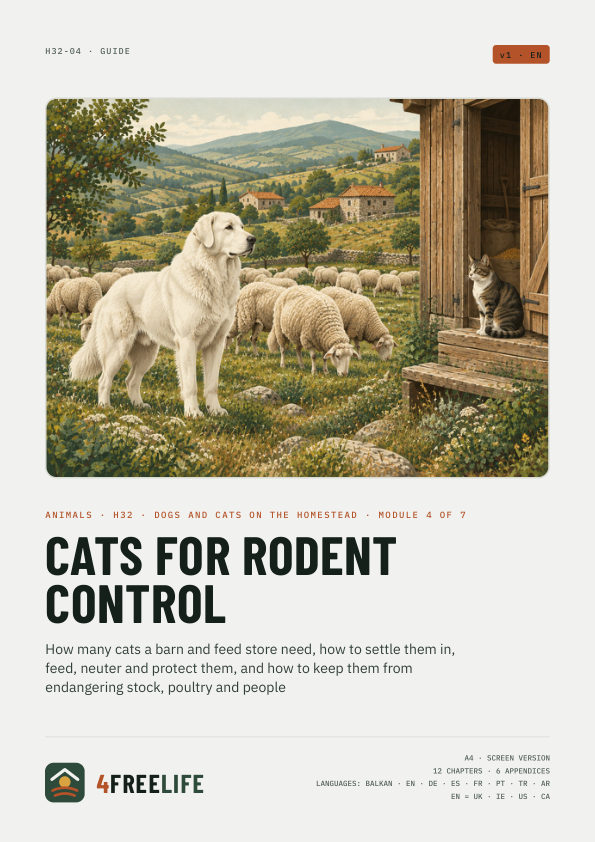
Cats for rodent control
How many cats a barn and feed store need, how to settle them in, feed, neuter and protect them, and how to keep them from endangering stock, poultry and people
€9
Secure checkout with Stripe · VAT included · The PDFs are in the language of this page.
Whole series: Dogs and cats on the homestead, €39
In short
- A cat is a help, not a replacement for closed bins, tidiness and box traps (H56-04 Rodent control without poison).
- For a barn, feed store and hayloft, 1–3 neutered cats are enough.
- Feed the cat every day in the same place: a well-fed cat still hunts, a hungry one leaves.
- Neutering at 4–6 months is the most important measure. One unneutered queen can have 2–3 litters a year.
- Keep cat faeces away from hay, grain and the vegetable garden: toxoplasmosis is dangerous to sheep, goats and pregnant women.
- No rodent poison where a cat hunts: a poisoned mouse poisons the cat too.
What's inside
Chapters
- What a cat can and can't do
- What kind of cat and where from
- How many cats and where
- Arrival and settling in
- Feeding
- Shelter and places for cats
- Neutering and controlling numbers
- Health of a barn cat
- Cats, stock and hygiene
- The cat in rodent control
- Common mistakes
- Printable checklist
Worksheets
- Kitten dates
- Cat colony record
- Observation log
- Food and cost calculator
- Barn and yard sketch
- A year with cats
Fields and checkboxes can be filled in with Adobe Acrobat Reader (desktop and mobile), and the calculator adds up by itself. Filling in may not work in some browsers. A print version comes with the screen PDF.
This guide in other languages: