
← Natural animal health
H34-01 · Module 1 of 7 · Pages: 22 · Worksheets: 7
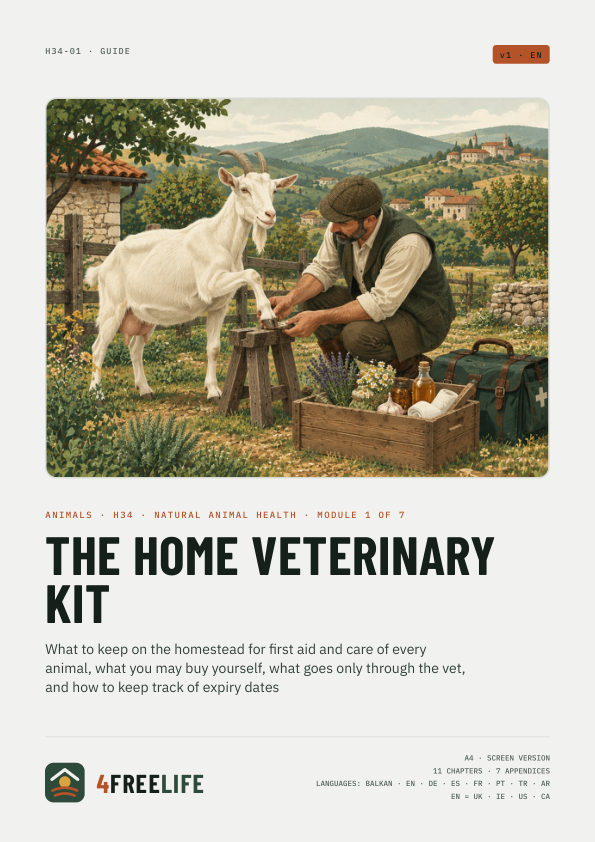
The home veterinary kit
What to keep on the homestead for first aid and care of every animal, what you may buy yourself, what goes only through the vet, and how to keep track of expiry dates
Secure checkout with Stripe · VAT included · The PDFs are in the language of this page.
Whole series: Natural animal health, €39
In short
- The kit is for first aid, care and support, not for treatment. The vet makes the diagnosis and chooses the medicine.
- Antibiotics, most wormers, painkillers, hormones and vaccines are prescription-only or given by the vet. No antibiotics on your own.
- The thermometer is the most important thing in the kit. Temperature is the first thing the vet will ask you.
- Every medicine given to an animal that produces milk, eggs or meat has a withdrawal period. Write it down and keep to it.
- Check expiry dates twice a year, and take old medicines and needles back to the vet or pharmacy.
- The vet's number must hang by the shed, for nights and weekends too.
What's inside
Chapters
- What a home kit is for
- The basic kit for every holding
- What you may use freely and what is vet only
- Extras for each species
- Normal values and how to measure them
- Storage, expiry dates and disposal
- Withdrawal periods, records and off-label use
- The natural part of the kit
- How to organise the kit
- Common mistakes
- Printable checklist
Worksheets
- Kit inventory with expiry dates
- Normal values to hang up
- Other normal signs
- Treatment record with withdrawal periods
- Kit and prevention calendar
- Kit cost calculator
- Contacts and when to call the vet at once
Fields and checkboxes can be filled in with Adobe Acrobat Reader (desktop and mobile), and the calculator adds up by itself. Filling in may not work in some browsers. A print version comes with the screen PDF.
This guide in other languages: