
← Natural animal health
H34-02 · Module 2 of 7 · Pages: 20 · Worksheets: 6
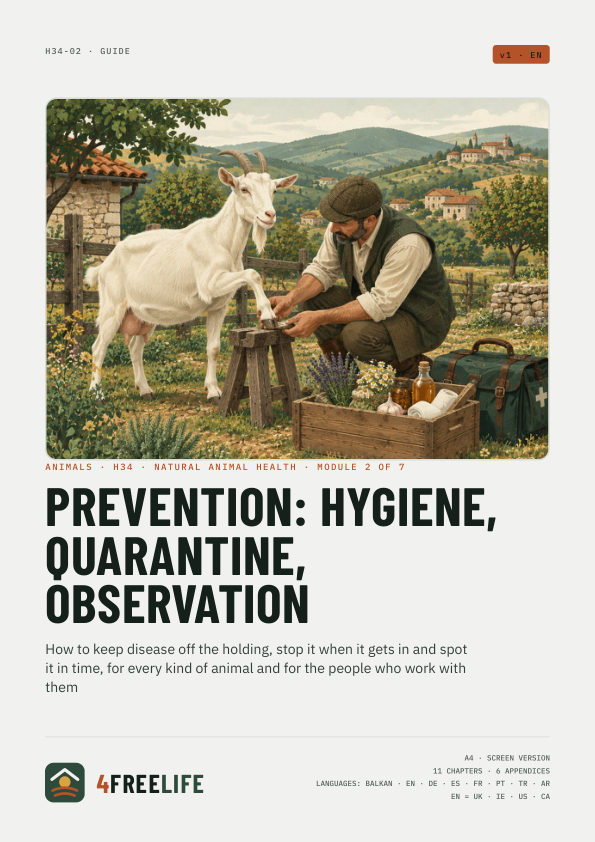
Prevention: hygiene, quarantine, observation
How to keep disease off the holding, stop it when it gets in and spot it in time, for every kind of animal and for the people who work with them
€9
Secure checkout with Stripe · VAT included · The PDFs are in the language of this page.
Whole series: Natural animal health, €39
In short
- Every new animal goes into quarantine for at least 30 days.
- Clean first, then disinfect. No disinfectant works on dirt and dung.
- Watch your animals for 2–3 minutes every morning, and count them in the evening. A disease spotted early is easier and cheaper.
- Every change of feed takes 7–10 days. Kitchen waste and meat never go to animals that produce food.
- Q fever, ringworm, salmonella, orf and, in the US and Canada, rabies pass to people. Gloves, hand washing and care for children and pregnant women.
- Agree vaccinations with your vet; some are compulsory by law.
What's inside
Chapters
- Three rings of biosecurity
- Hygiene of sheds and equipment
- Quarantine
- Daily observation
- Feed, water and housing as prevention
- Vaccinations
- Mixed holdings: species that don't get along
- Protecting people: diseases that pass from animals
- A health plan with your vet
- Common mistakes
- Printable checklist
Worksheets
- Quarantine sheet
- Weekly observation sheet
- Prevention calendar by species
- Cleaning and visitor log
- Prevention cost calculator
- Contacts and when to call the vet at once
Fields and checkboxes can be filled in with Adobe Acrobat Reader (desktop and mobile), and the calculator adds up by itself. Filling in may not work in some browsers. A print version comes with the screen PDF.
This guide in other languages: