
← Natural animal health
H34-03 · Module 3 of 7 · Pages: 19 · Worksheets: 6
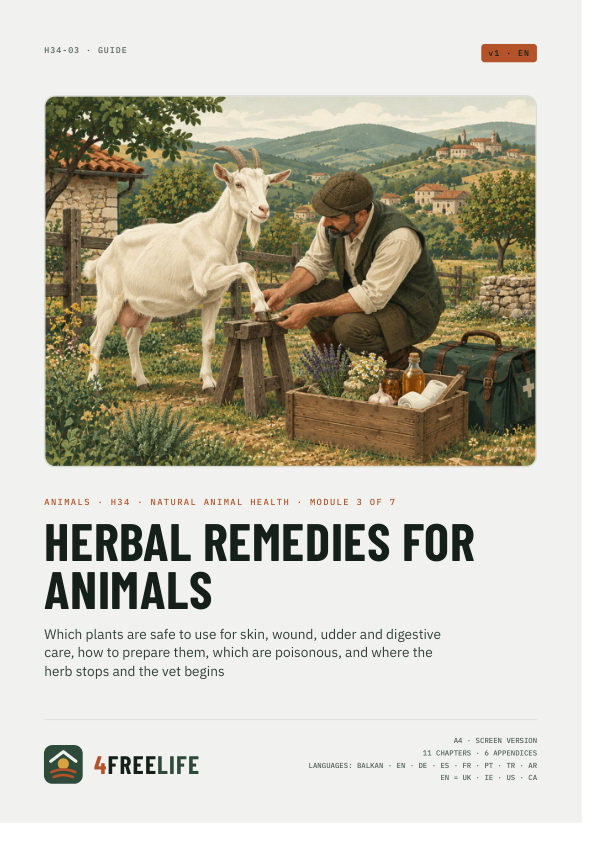
Herbal remedies for animals
Which plants are safe to use for skin, wound, udder and digestive care, how to prepare them, which are poisonous, and where the herb stops and the vet begins
Secure checkout with Stripe · VAT included · The PDFs are in the language of this page.
Whole series: Natural animal health, €39
In short
- Herbal remedies are prevention, care and support, not a replacement for the vet or for an antibiotic when one is needed.
- Only a plant you know for certain, for a species you know it is safe for.
- External use is the safest: calendula salve, a chamomile compress, rinsing.
- Garlic and onions are poisonous to dogs and cats, essential oils to cats, and St John's wort causes sunburn.
- Record every remedy. For herbal products too, ask the vet about the withdrawal period for milk, eggs and meat.
- Walk the pasture for poisonous plants every spring and summer.
What's inside
Chapters
- What herbs can and can't do
- Rules for safe use
- Types of preparation
- Skin, wounds and feet
- Digestion and appetite
- Udder and teats
- Parasites and insects
- Plants poisonous to animals
- Where the herb stops
- Common mistakes
- Printable checklist
Worksheets
- Remedy register
- Use record with withdrawal periods
- Pasture check for poisonous plants
- Calendar for harvesting herbs for animals
- Calendula salve calculator
- Contacts and when to call the vet at once
Fields and checkboxes can be filled in with Adobe Acrobat Reader (desktop and mobile), and the calculator adds up by itself. Filling in may not work in some browsers. A print version comes with the screen PDF.
This guide in other languages: