
← Firewood and heating
H60-06 · Module 6 of 7 · Pages: 19 · Worksheets: 5
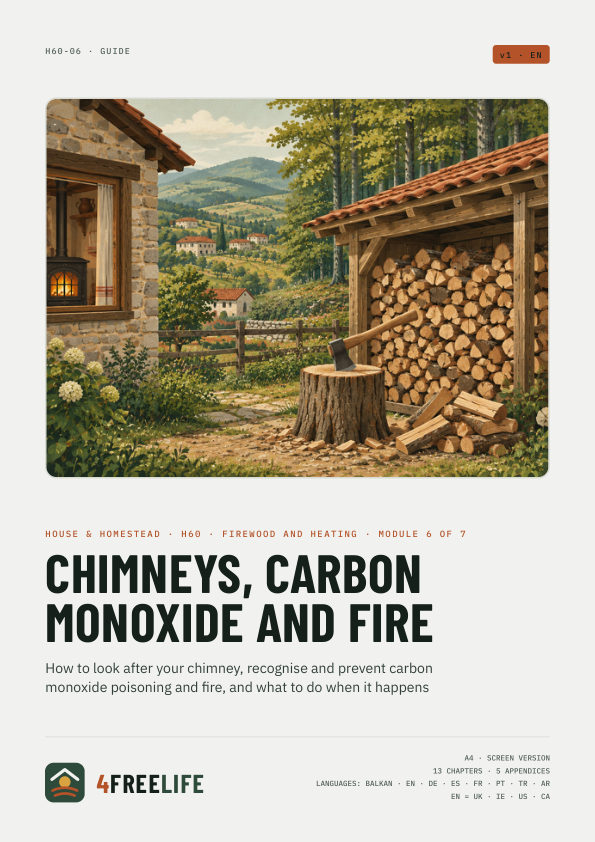
Chimneys, carbon monoxide and fire
How to look after your chimney, recognise and prevent carbon monoxide poisoning and fire, and what to do when it happens
Secure checkout with Stripe · VAT included · The PDFs are in the language of this page.
Whole series: Firewood and heating, €39
In short
- Carbon monoxide (CO) has no colour and no smell. The only reliable protection is a CO alarm near the stove and the bedrooms.
- Headache, nausea and drowsiness in several people at once, which ease outdoors: get out at once and call for help.
- A wood-burning chimney is swept at least before the season and in midwinter, or as often as your sweep and insurer advise.
- Chimney fire: close the stove's air, call the fire service, don't pour water down the chimney.
- Ash goes in a metal bucket with a lid, outdoors, for at least 3–4 days.
What's inside
Chapters
- How a chimney works
- Soot, tar and chimney fires
- Sweeping and the sweep
- Chimney fire
- An old chimney and the air supply
- Carbon monoxide
- The carbon monoxide alarm
- When the alarm sounds or you suspect CO
- Fire protection in the house
- Fires outdoors and wildfire
- Burns and first aid
- Common mistakes
- Printable checklist
Worksheets
- Chimney log
- Alarm calculator
- Monthly check and budget
- Safety calendar
- Escape plan and wall card
Fields and checkboxes can be filled in with Adobe Acrobat Reader (desktop and mobile), and the calculator adds up by itself. Filling in may not work in some browsers. A print version comes with the screen PDF.
This guide in other languages: