
← Soil fertility
H03-03 · Module 3 of 7 · Pages: 19 · Worksheets: 5
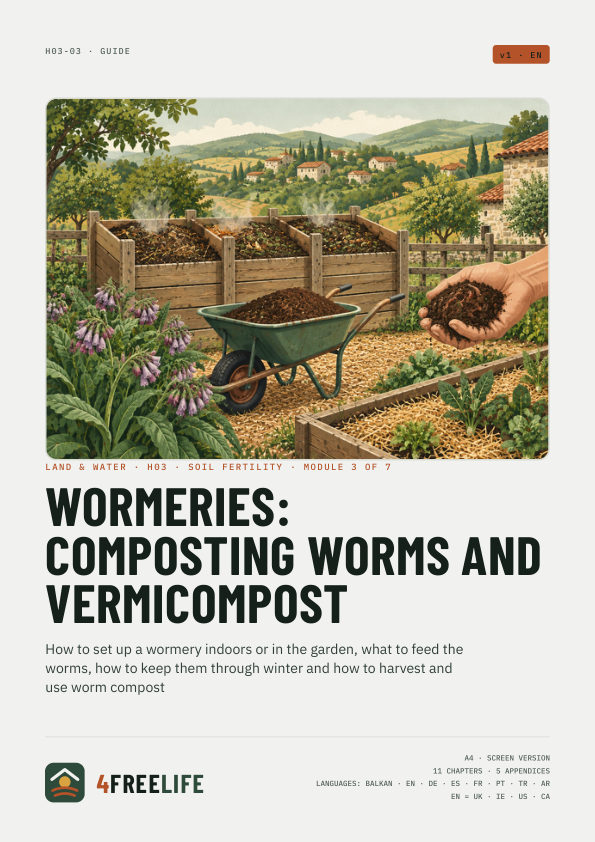
Wormeries: composting worms and vermicompost
How to set up a wormery indoors or in the garden, what to feed the worms, how to keep them through winter and how to harvest and use worm compost
€9
Secure checkout with Stripe · VAT included · The PDFs are in the language of this page.
Whole series: Soil fertility, €39
In short
- A wormery takes composting worms (tiger worms or brandlings, red wigglers in the US: *Eisenia fetida* and *E. andrei*), not earthworms from the garden.
- Worms need 15–25 °C (60–77 °F), 70–80 % moisture (wetter than a wrung-out sponge) and darkness. Below 5 °C they stop, above 30 °C they die.
- Sizing rule: kg of worms = 2 × kg of scraps a day; 0.2 m² of surface per kg of scraps a week.
- Don't feed more than they eat. Overfeeding is the number one cause of smells and flies.
- Vermicompost is strong: no more than 20 % in seedling compost, 0.5–1 L per m² on beds.
What's inside
Chapters
- Which worms and why
- How big
- Types of wormery
- Bedding: a home for the worms
- Food: what, how much and how
- Conditions and problems
- Breeding and splitting
- Harvesting vermicompost
- How much and where to use it
- Common mistakes
- Printable checklist
Worksheets
- Wormery calculator
- Plan and shopping list
- Feeding log
- Harvest and worm record
- Wormery calendar
Fields and checkboxes can be filled in with Adobe Acrobat Reader (desktop and mobile), and the calculator adds up by itself. Filling in may not work in some browsers. A print version comes with the screen PDF.
This guide in other languages: