
← Seed and propagation
H17-07 · Module 7 of 7 · Pages: 19 · Worksheets: 6
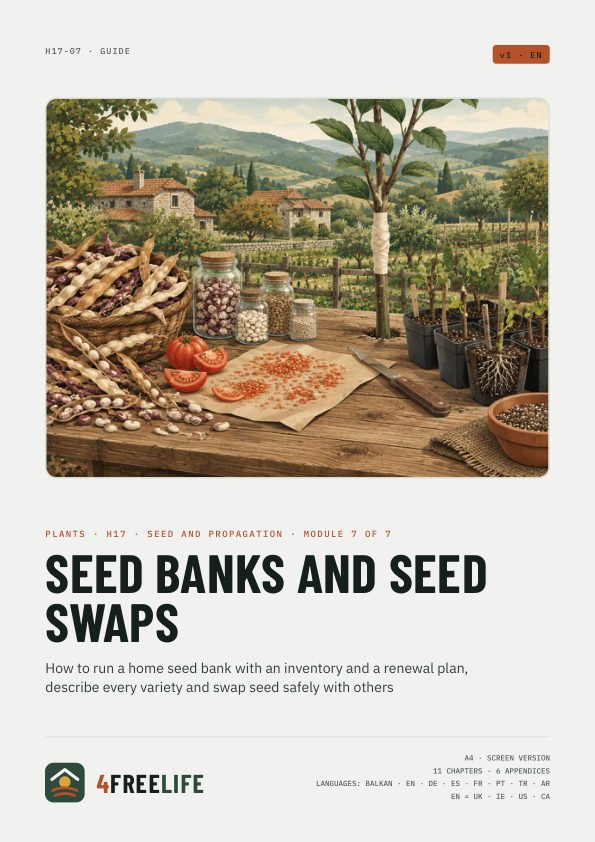
Seed banks and seed swaps
How to run a home seed bank with an inventory and a renewal plan, describe every variety and swap seed safely with others
€9
Secure checkout with Stripe · VAT included · The PDFs are in the language of this page.
Whole series: Seed and propagation, €39
In short
- Every variety has a code, a packet, a line in the inventory and a card with its description and origin.
- Keep two copies: a working stock for sowing and a reserve in another place or with a friend.
- Have a renewal plan: every year sow 3–6 varieties for fresh seed, before the old seed loses its germination.
- Swap only healthy, tested, labelled seed of open-pollinated varieties.
- Selling seed is regulated by law and needs registration. Swapping small amounts between gardeners is often allowed, but check the rules where you live.
- Don't swap tomato and pepper seed of unknown origin, and don't take seed across a border without checking.
What's inside
Chapters
- What a home seed bank is
- Inventory and codes
- The variety card: description and story
- How much to keep and the renewal plan
- Swapping: the rules of good seed
- Community seed swaps and seed libraries
- Seed and the law
- Diseases and risks carried by seed
- Gene banks and seed groups
- Common mistakes
- Printable checklist
Worksheets
- Seed bank inventory
- Variety renewal plan
- Variety card
- Swap record
- Swap packet calculator
- Seed bank calendar
Fields and checkboxes can be filled in with Adobe Acrobat Reader (desktop and mobile), and the calculator adds up by itself. Filling in may not work in some browsers. A print version comes with the screen PDF.
This guide in other languages: