
← Bees
H29-02 · Module 2 of 7 · Pages: 21 · Worksheets: 6
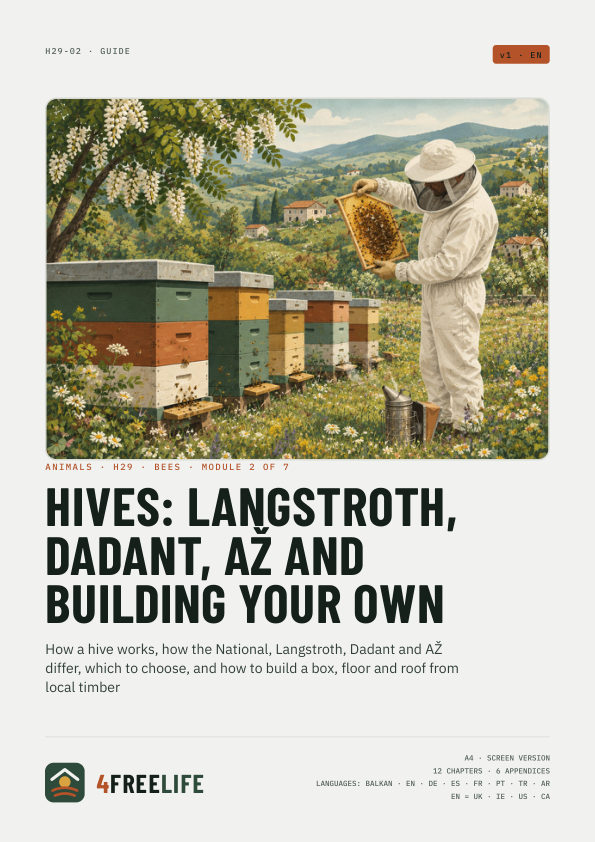
Hives: Langstroth, Dadant, AŽ and building your own
How a hive works, how the National, Langstroth, Dadant and AŽ differ, which to choose, and how to build a box, floor and roof from local timber
Secure checkout with Stripe · VAT included · The PDFs are in the language of this page.
Whole series: Bees, €39
In short
- Choose one hive type for the whole apiary; frame sizes must match.
- National is the standard in the UK and Ireland, Langstroth in North America: kit is sold everywhere.
- Dadant has a large brood box, less work but heavier boxes; AŽ is a cabinet for a bee house, with no lifting.
- Everything rests on bee space of 6–9 mm (¼–⅜ in): less, they glue it; more, they fill it with comb.
- Build a hive yourself only from a bought pattern, from dry cedar, pine, spruce or lime; no paint inside.
- Second-hand hives: clean and scorch them first, and burn old frames.
What's inside
Chapters
- Bee space and the movable frame
- Parts of a hive
- National, Langstroth, Dadant and AŽ
- How to choose
- Floor, roof and ventilation
- Timber, finish and upkeep
- Building a Langstroth box yourself
- Frames and foundation
- Bee houses and weather protection
- Inventory and marking
- Common mistakes
- Printable checklist
Worksheets
- Comparing hives for my apiary
- Materials calculator
- Hive and equipment register
- Hive card
- Building and maintenance calendar
- Hive or bee house sketch
Fields and checkboxes can be filled in with Adobe Acrobat Reader (desktop and mobile), and the calculator adds up by itself. Filling in may not work in some browsers. A print version comes with the screen PDF.
This guide in other languages: