
← Natural animal health
H34-04 · Module 4 of 7 · Pages: 21 · Worksheets: 7
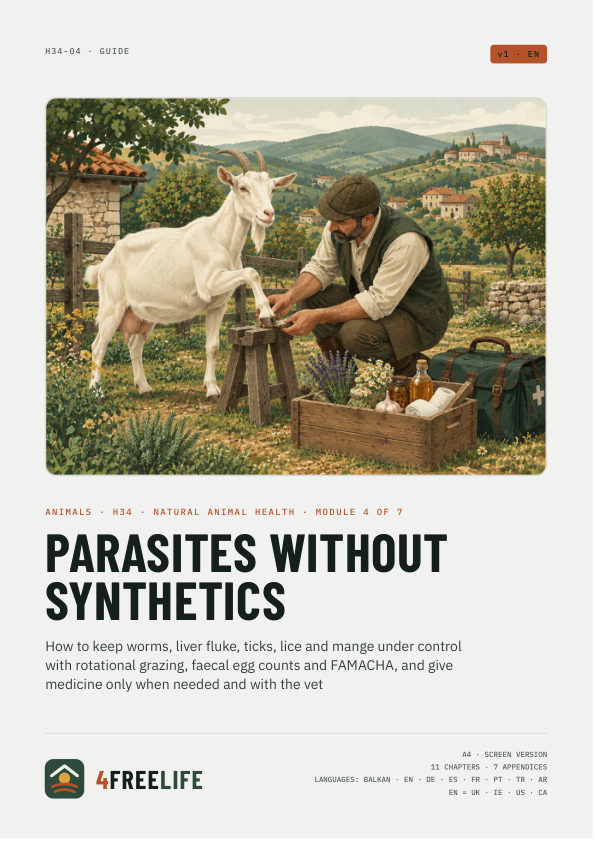
Parasites without synthetics
How to keep worms, liver fluke, ticks, lice and mange under control with rotational grazing, faecal egg counts and FAMACHA, and give medicine only when needed and with the vet
€9
Secure checkout with Stripe · VAT included · The PDFs are in the language of this page.
Whole series: Natural animal health, €39
In short
- Don't treat blindly. A faecal egg count 2–4 times a year tells you whether there is a problem and how big it is.
- FAMACHA (eyelid colour) every 2–4 weeks in summer in sheep and goats; treat only animals scoring 4–5 and in poor condition.
- Rotational grazing: don't graze below 8–10 cm (3–4 in), rest the paddocks, put young stock on the cleanest grazing.
- Choose a wormer with the vet or adviser, dose by real weight and keep to the withdrawal period.
- Fence off wet ground with mud snails: that's where liver fluke lives.
- Never give dogs raw offal; the dog tapeworm (hydatid) is dangerous for people. A dog around livestock is treated for tapeworm at least every 3 months, every 4–6 weeks with access to slaughter and carcasses.
What's inside
Chapters
- Parasites on the holding
- How parasites live on pasture
- Faecal egg counts
- FAMACHA and the five-point check
- Rotational grazing
- Treat only when needed
- Natural support
- External parasites
- Parasites that pass to people
- Common mistakes
- Printable checklist
Worksheets
- Grazing rotation plan
- FAMACHA and five-point record
- Faecal egg count results
- Treatment record with withdrawal periods
- Parasite calendar by species
- Pasture area calculator
- Contacts and when to call the vet at once
Fields and checkboxes can be filled in with Adobe Acrobat Reader (desktop and mobile), and the calculator adds up by itself. Filling in may not work in some browsers. A print version comes with the screen PDF.
This guide in other languages: