
← Soil fertility
H03-02 · Module 2 of 7 · Pages: 22 · Worksheets: 7
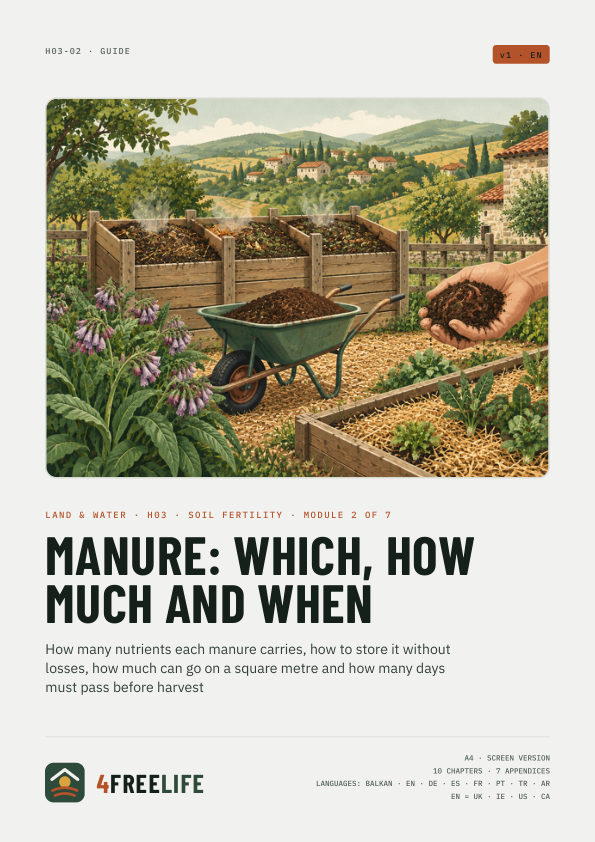
Manure: which, how much and when
How many nutrients each manure carries, how to store it without losses, how much can go on a square metre and how many days must pass before harvest
€9
Secure checkout with Stripe · VAT included · The PDFs are in the language of this page.
Whole series: Soil fertility, €39
In short
- Fresh manure: at least 120 days from spreading to harvest of vegetables that touch the soil, 90 days for everything else. Salad crops, radishes, strawberries and herbs get only mature compost.
- Limit: on average no more than 170 kg N/ha a year from manure, which is 17 g of nitrogen per m²: about 3 kg of cattle manure or 1 kg of chicken manure per m².
- Muck heap: impermeable base, a roof or tarp, at least 30 m (100 ft) from a well, and never uphill of it.
- Bought manure and hay can carry herbicides that survive composting. Do a bean test before it goes on the garden.
- Gloves, hand washing and an up-to-date tetanus vaccination for anyone who handles manure.
What's inside
Chapters
- Which manure: types and nutrients
- How much manure you have
- A muck heap without losses
- Well-rotted manure and composting
- Hygiene: pathogens and harvest intervals
- How much for each crop
- When and how to spread
- Bought manure: what to ask
- Common mistakes
- Printable checklist
Worksheets
- Manure calculator
- Nitrogen calculator
- Bean test
- Spreading log
- Muck heap plan
- Questions for the manure seller
- Manure calendar
Fields and checkboxes can be filled in with Adobe Acrobat Reader (desktop and mobile), and the calculator adds up by itself. Filling in may not work in some browsers. A print version comes with the screen PDF.
This guide in other languages: