
← Seed and propagation
H17-02 · Module 2 of 7 · Pages: 21 · Worksheets: 6
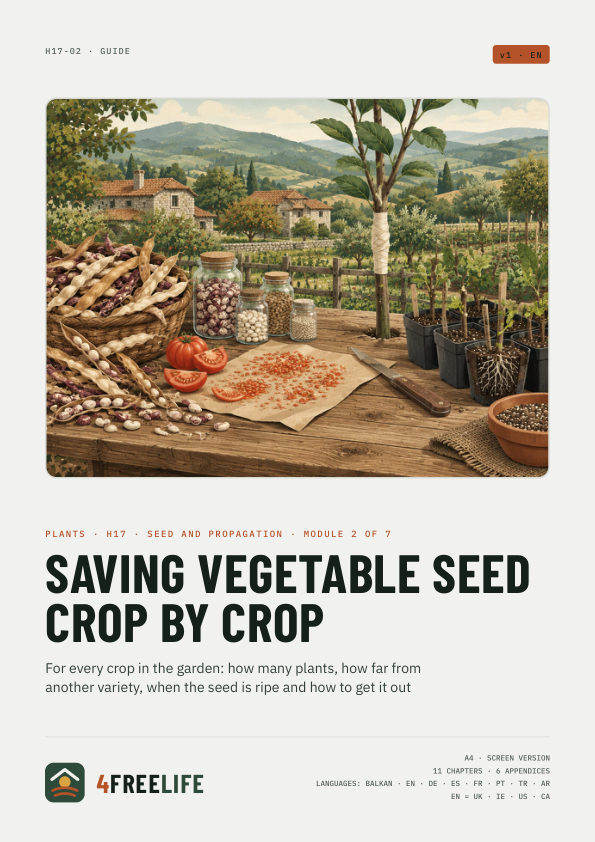
Saving vegetable seed crop by crop
For every crop in the garden: how many plants, how far from another variety, when the seed is ripe and how to get it out
Secure checkout with Stripe · VAT included · The PDFs are in the language of this page.
Whole series: Seed and propagation, €39
In short
- Seed only from healthy, open-pollinated plants, never from hybrids (F1).
- Self-pollinating crops (beans, peas, tomatoes, lettuce) need 3–10 m to another variety (old tomato varieties 10–15 m). Insects and wind carry pollen hundreds of metres: then you hand-pollinate or bag the flower.
- For seed, leave the fruit overripe, well past the eating stage. Melons and watermelons are the exception.
- Tomatoes and cucumbers: the seed with its gel ferments in a jar for 2–4 days, then is rinsed and dried.
- Biennials (carrots, beetroot, cabbage, onions) are selected in autumn, stored over winter and replanted in spring. You need 20 or more.
- Label every packet straight away: crop, variety, year, number of plants.
What's inside
Chapters
- Five rules of the seed garden
- Isolation: how to stop crossing
- Tomatoes, peppers and aubergines
- Beans, peas and lettuce
- Squash, cucumbers, melons and watermelons
- Biennials: carrots, beetroot and parsley
- Cabbage, kale and radishes
- Onions and leeks
- Maize and spinach: wind-pollinated
- Common mistakes
- Printable checklist
Worksheets
- Vegetable seed calendar
- Isolation plan
- Seed-plant log
- Hand-pollination log
- Expected seed calculator
- Packet labels
Fields and checkboxes can be filled in with Adobe Acrobat Reader (desktop and mobile), and the calculator adds up by itself. Filling in may not work in some browsers. A print version comes with the screen PDF.
This guide in other languages: