
← Grain and flour storage
H56-03 · Module 3 of 7 · Pages: 20 · Worksheets: 7
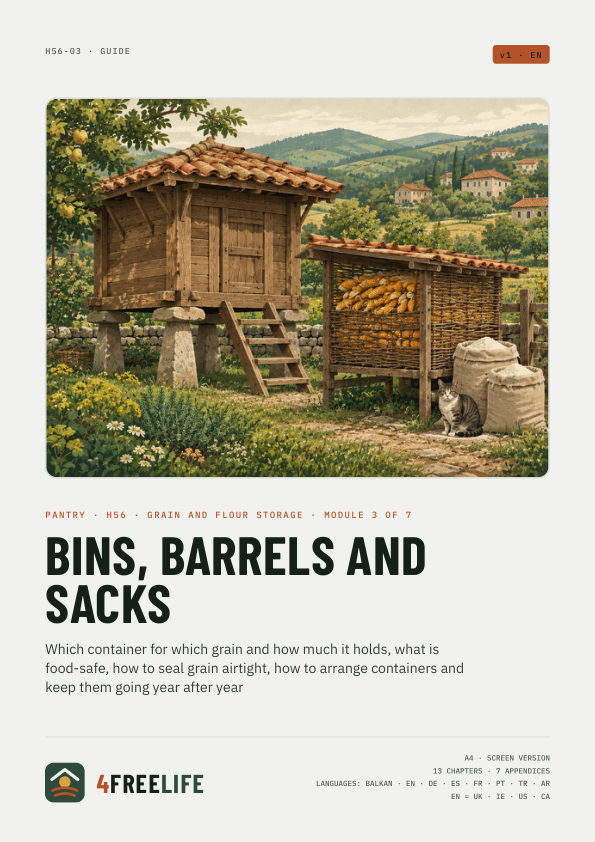
Bins, barrels and sacks
Which container for which grain and how much it holds, what is food-safe, how to seal grain airtight, how to arrange containers and keep them going year after year
€9
Secure checkout with Stripe · VAT included · The PDFs are in the language of this page.
Whole series: Grain and flour storage, €39
In short
- A grain container must be food-grade, dry and clean, with a lid that seals. Where there are rats, metal only.
- A 200 L drum holds roughly 150 kg of wheat or maize, a 120 L drum 85 kg, a 30 L bin 22 kg.
- Never containers that held fuel, oil, paint, pesticides or chemicals, even washed.
- Sealed airtight, dry grain runs out of oxygen and the insects in it die. The condition is grain at no more than 13 % moisture.
- Containers on pallets or shelves, 10–15 cm (4–6 in) off the floor, 20–30 cm from the wall, with a gangway for inspection.
What's inside
Chapters
- Which container for what
- What a container must do
- Plastic: light, but not for rats
- Metal: safe from rodents
- Glass and jars
- Sacks: for transport and the short term
- Airtight storage
- Where and how to arrange containers
- Filling, cleaning and rotation
- A homemade grain chest
- What to do when a container fails
- Common mistakes
- Printable checklist
Worksheets
- Capacity calculator
- How many containers you need
- Container budget
- Container inventory
- Larder and shelf plan
- Container labels
- The container year
Fields and checkboxes can be filled in with Adobe Acrobat Reader (desktop and mobile), and the calculator adds up by itself. Filling in may not work in some browsers. A print version comes with the screen PDF.
This guide in other languages: