
← Medicinal and culinary herbs
H16-03 · Module 3 of 7 · Pages: 21 · Worksheets: 6
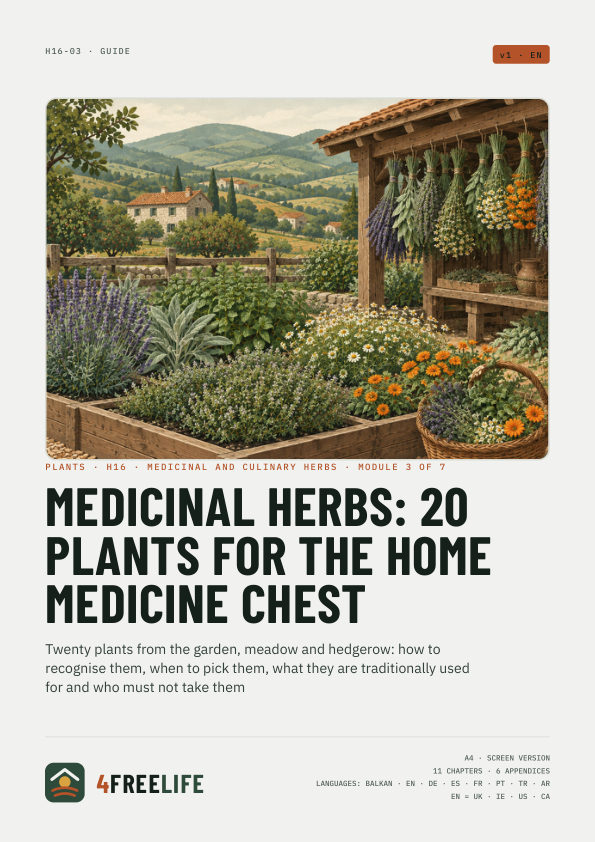
Medicinal herbs: 20 plants for the home medicine chest
Twenty plants from the garden, meadow and hedgerow: how to recognise them, when to pick them, what they are traditionally used for and who must not take them
Secure checkout with Stripe · VAT included · The PDFs are in the language of this page.
Whole series: Medicinal and culinary herbs, €39
In short
- Herbal tea is support for mild complaints, not a substitute for a doctor. What is described is traditional use, not treatment.
- Pregnant and breastfeeding women, children under 4 and anyone on regular medication ask a doctor or pharmacist before taking a medicinal tea.
- St John's wort changes how many medicines work (the pill, warfarin, antidepressants) and makes skin sensitive to sun.
- Comfrey and coltsfoot are never taken internally: pyrrolizidine alkaloids damage the liver. Comfrey only on the skin, briefly.
- Drink a medicinal tea for 1–2 weeks, then take a break. If a complaint does not improve within 3–5 days, see a doctor.
What's inside
Chapters
- The home herbal medicine chest: what it is and what it is not
- Who must ask first: pregnancy, children, medicines
- Cards: garden herbs
- Cards: meadows and field edges
- Cards: trees and shrubs
- Comfrey: only on the skin, and briefly
- How much and for how long
- When herbal tea is not enough
- What to keep in the home medicine chest
- Common mistakes
- Printable checklist
Worksheets
- Medicine chest stock calculator
- Medicine chest harvest calendar
- Usage log
- Household medicines and herbs
- Medicine chest bed plan
- Jar labels
Fields and checkboxes can be filled in with Adobe Acrobat Reader (desktop and mobile), and the calculator adds up by itself. Filling in may not work in some browsers. A print version comes with the screen PDF.
This guide in other languages: