
← Seed and propagation
H17-01 · Module 1 of 7 · Pages: 19 · Worksheets: 5
Why save your own seed: heirlooms and hybrids
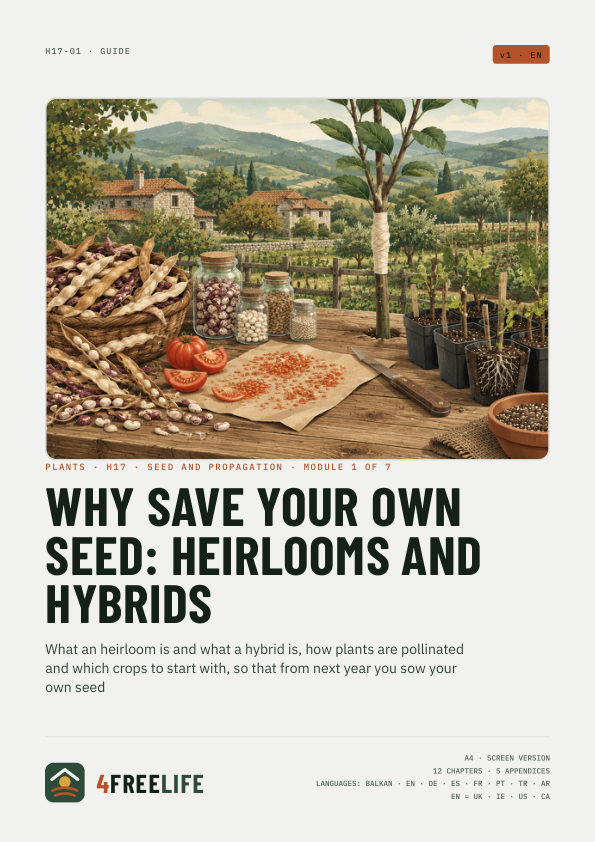
What an heirloom is and what a hybrid is, how plants are pollinated and which crops to start with, so that from next year you sow your own seed
Secure checkout with Stripe · VAT included · The PDFs are in the language of this page.
Whole series: Seed and propagation, €39
In short
- Save seed only from open-pollinated varieties: heirloom, local and well-adapted ones. Seed from hybrids (F1) does not give the same plant.
- The easiest start is beans, peas, tomatoes, lettuce and peppers: they are self-pollinating and annual.
- Squash, cucumbers, cabbage, carrots, onions and maize cross with other varieties. They need distance or hand pollination.
- Take seed from several plants, not one. Otherwise the variety weakens within a few years.
- Choose the best plants all season, not just the finest fruit in August. That way the variety suits your holding better year after year.
- Your own seed doesn't mean you never buy again. Hybrids and certified seed have their place in the garden.
What's inside
Chapters
- What your own seed gives you
- Variety, population and hybrid
- Why hybrid seed doesn't come true
- How plants are pollinated
- Diversity: why not seed from one plant
- Selection on your own holding
- Start small: the first five crops
- Heirloom varieties to look for
- How much seed a family needs
- The seed saver's year: how it fits the garden
- Common mistakes
- Printable checklist
Worksheets
- Seed saver's calendar
- Varieties in the house and in the area
- Seed calculator
- First-year plan
- Questionnaire for older growers
Fields and checkboxes can be filled in with Adobe Acrobat Reader (desktop and mobile), and the calculator adds up by itself. Filling in may not work in some browsers. A print version comes with the screen PDF.
This guide in other languages: