
← Cooling without electricity
H57-05 · Module 5 of 7 · Pages: 20 · Worksheets: 6
Cold pantries and the north wall
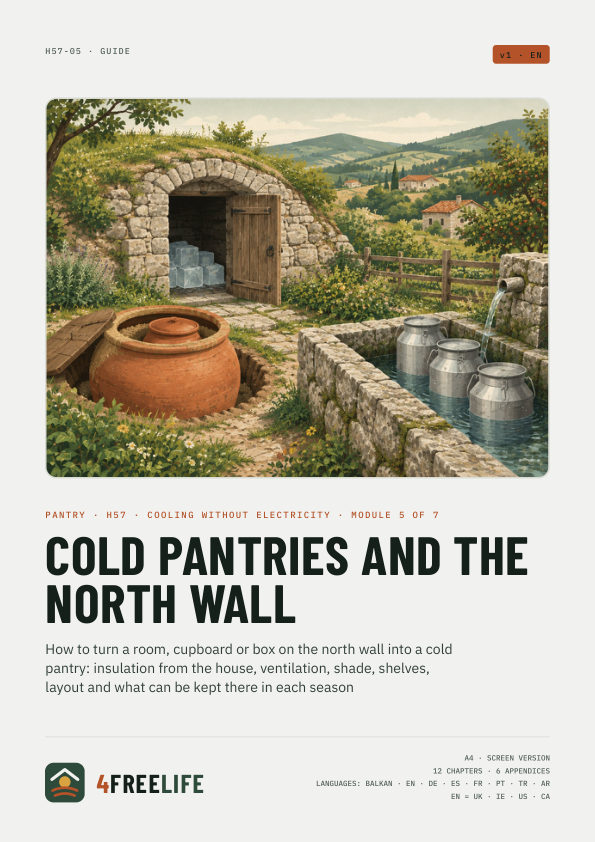
How to turn a room, cupboard or box on the north wall into a cold pantry: insulation from the house, ventilation, shade, shelves, layout and what can be kept there in each season
€9
Secure checkout with Stripe · VAT included · The PDFs are in the language of this page.
Whole series: Cooling without electricity, €39
In short
- A north-facing cold pantry runs roughly 3–8 °C in a British or Irish winter (0–4 °C only in cold spells), 0–6 °C in a Canadian or northern US winter, and 14–20 °C in summer. In winter it can be a fridge; in summer it is not.
- Insulate the wall to the house (8–10 cm, 3–4 in), and protect it from the sun with shade, a pale colour and ceiling insulation.
- Ventilation: cold-air inlet low on the north side, outlet high. Open at night, closed by day.
- Put fly and mouse mesh over the vents. No poison in a pantry with food.
- Meat, milk and leftovers stay in the pantry only while the min/max thermometer reads 4 °C or less, by day too.
- Never a boiler, water heater or stove next to the pantry. They bring heat, and a stove brings CO.
What's inside
Chapters
- How cold a pantry can get
- Choosing the site
- Insulation from the house and the sun
- Ventilation: night air works for you
- A cold cupboard on the north wall
- A window or balcony box
- Shade, planting and colour
- Fitting out: shelves, containers and order
- The pantry through the year: what can go in when
- Safety in the pantry
- Common mistakes
- Printable checklist
Worksheets
- Materials calculator
- Shelving calculator
- Pantry temperature through the year
- Pantry sketch
- Shelf plan
- A year of the cold pantry
Fields and checkboxes can be filled in with Adobe Acrobat Reader (desktop and mobile), and the calculator adds up by itself. Filling in may not work in some browsers. A print version comes with the screen PDF.
This guide in other languages: