
← The pantry calendar
H58-05 · Module 5 of 7 · Pages: 20 · Worksheets: 7
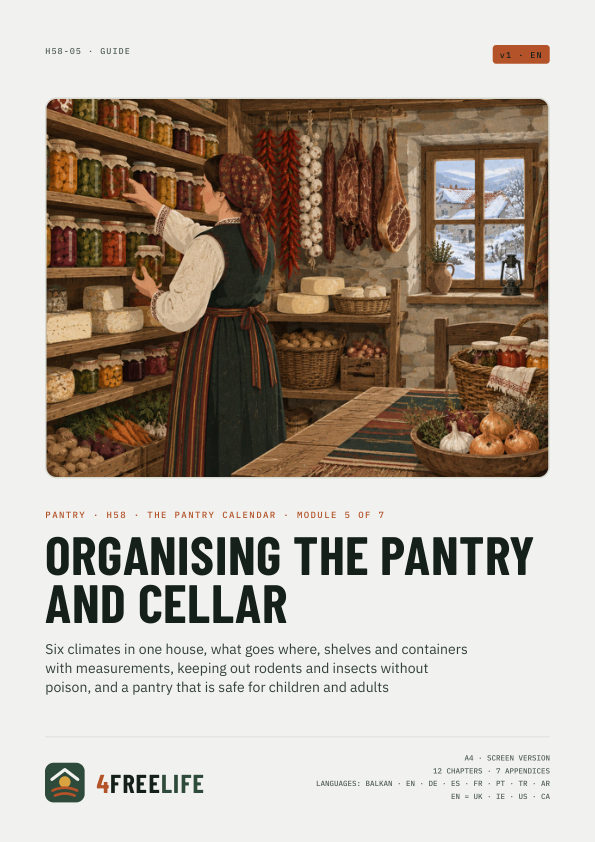
Organising the pantry and cellar
Six climates in one house, what goes where, shelves and containers with measurements, keeping out rodents and insects without poison, and a pantry that is safe for children and adults
€9
Secure checkout with Stripe · VAT included · The PDFs are in the language of this page.
Whole series: The pantry calendar, €39
In short
- Stores need six climates: cold and damp (cellar), cold and dry (onions), warm and dry (squash), dry and dark (store room), cold larder (meat, lard, cheese) and the freezer.
- Dry food doesn't go in the cellar. Flour, grain, dried fruit, herbs and beans need 5–15 °C (41–59 °F) and humidity below 60 %.
- One metre (3 ft) of shelf 30 cm (12 in) deep holds roughly 30 jars of 720 mL–1 L or 50 jars of 370 mL in one layer.
- Heavy at the bottom, light at the top; the lowest shelf 10–15 cm (4–6 in) off the floor, containers 20–30 cm from the wall.
- No poison in the pantry: 6 mm (¼ in) mesh, traps, a cat, closed containers, 48 h in the freezer for dried food.
- Curing salt, lime, cleaning products and fuel never on a shelf with food.
What's inside
Chapters
- Six climates in one house
- What goes where
- Dry food doesn't go in the cellar
- Shelves: measurements and load
- Containers for every store
- Layout: zones and order
- Rodents and insects without poison
- The freezer as part of the pantry
- Safety in the pantry and cellar
- The pantry by size of homestead
- Most common mistakes
- Printable checklist
Worksheets
- Shelf calculator
- Container and freezer calculator
- Sketch of the pantry and cellar
- Map of places
- Shelf plan
- Equipment and budget
- Calendar for organising
Fields and checkboxes can be filled in with Adobe Acrobat Reader (desktop and mobile), and the calculator adds up by itself. Filling in may not work in some browsers. A print version comes with the screen PDF.
This guide in other languages: