
← Traditional crafts
H63-01 · Module 1 of 7 · Pages: 22 · Worksheets: 7
Soap from lard and tallow
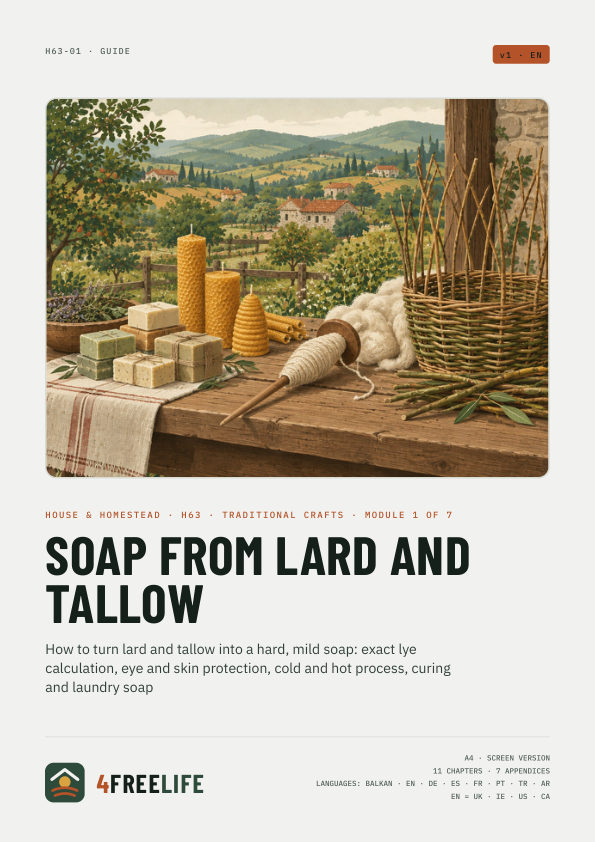
How to turn lard and tallow into a hard, mild soap: exact lye calculation, eye and skin protection, cold and hot process, curing and laundry soap
€9
Secure checkout with Stripe · VAT included · The PDFs are in the language of this page.
Whole series: Traditional crafts, €39
In short
- Lye (NaOH) always goes into the water, never water onto the lye. Goggles, gloves, long sleeves, children and pets out of the room.
- The amount of lye is calculated to the gram for each fat separately. Scales accurate to 1 g are a must; cups and spoons are not good enough.
- The recipe always leaves 5 % extra fat: the soap is mild, and a small weighing error does not make a harsh bar.
- Containers only of stainless steel or hard plastic (PP, HDPE). Never aluminium: lye eats it and gives off flammable hydrogen.
- Cold process soap cures for 4–6 weeks before use. The pH of finished soap is 9–10.
- Soap for sale is a cosmetic product (or, in the US, may be a consumer product) with its own rules. Check with the competent authority where you live.
What's inside
Chapters
- How soap is made
- Safety: lye
- Equipment and ingredients
- Fats and oils: what soap each one makes
- Calculating a recipe step by step
- Cold process step by step
- Hot process and old boiled soap
- Curing, cutting and storing
- Additives, scents and laundry soap
- Common mistakes
- Printable checklist
Worksheets
- Lye calculator
- Water, scent and cost calculator
- Batch dates
- Batch log
- Soapmaker's calendar
- Labels
- Equipment and safety list
Fields and checkboxes can be filled in with Adobe Acrobat Reader (desktop and mobile), and the calculator adds up by itself. Filling in may not work in some browsers. A print version comes with the screen PDF.
This guide in other languages: