
← The orchard
H12-07 · Module 7 of 7 · Pages: 19 · Worksheets: 6
Harvesting and storing fruit
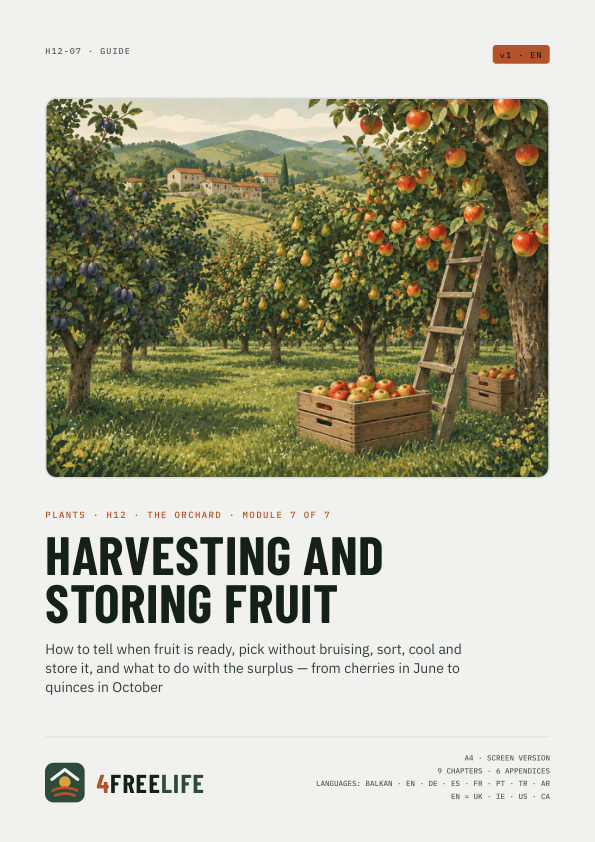
How to tell when fruit is ready, pick without bruising, sort, cool and store it, and what to do with the surplus — from cherries in June to quinces in October
€9
Secure checkout with Stripe · VAT included · The PDFs are in the language of this page.
Whole series: The orchard, €39
In short
- Summer varieties are picked to eat straight away; winter apples and pears earlier, while still hard, to ripen in store.
- An apple is ready when you lift and twist it and it comes away with its stalk; the pips are brown.
- Pick with the stalk, using your palm, not your fingertips, and lower fruit into the basket, don't drop it.
- Sort straight away: for storing, for eating, for processing, for compost. Rotten and mouldy fruit never goes into juice or jam.
- Cool fruit for storing overnight and keep it at 0–4 °C (32–39 °F) in high humidity, away from vegetables.
- Record kg per tree: after three years you know what your orchard really gives.
What's inside
Chapters
- Ripening calendar: June to October
- How to tell ripeness
- Picking without bruising
- Sorting: four crates
- Cooling and short-term storage
- What to do with the surplus
- Crop records: what your orchard really gives
- Common mistakes
- Printable checklist
Worksheets
- Picking calendar
- Harvest map
- Picking log per tree
- Crop and crate calculator
- Store record
- Fruit use plan
Fields and checkboxes can be filled in with Adobe Acrobat Reader (desktop and mobile), and the calculator adds up by itself. Filling in may not work in some browsers. A print version comes with the screen PDF.
This guide in other languages: