
← Mushrooms
H18-07 · Module 7 of 7 · Pages: 20 · Worksheets: 7
Problems, moulds and safety
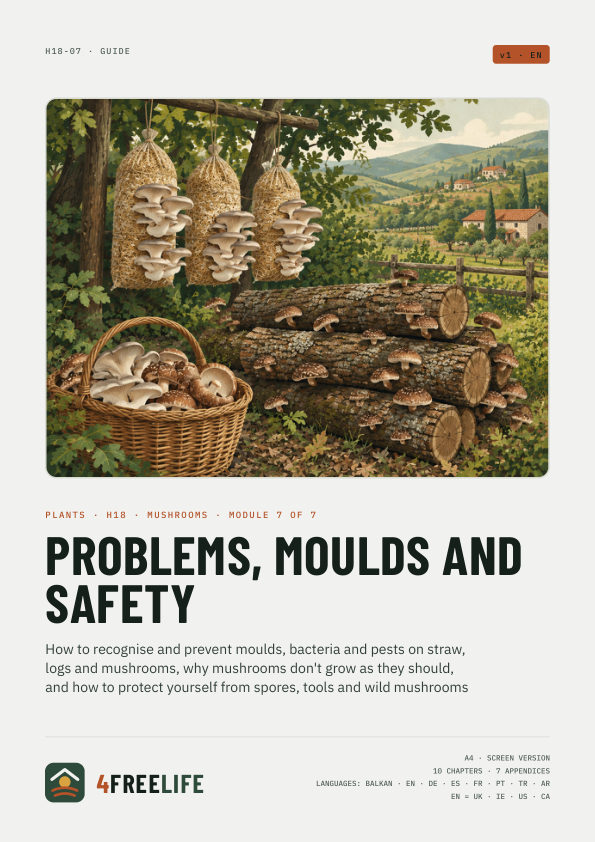
How to recognise and prevent moulds, bacteria and pests on straw, logs and mushrooms, why mushrooms don't grow as they should, and how to protect yourself from spores, tools and wild mushrooms
Secure checkout with Stripe · VAT included · The PDFs are in the language of this page.
Whole series: Mushrooms, €39
In short
- Most problems are prevented by hygiene: a clean place, clean hands, good pasteurisation, fresh spawn.
- Green mould (Trichoderma) is the most common enemy. A contaminated bag is never opened in the room; it is carried out closed.
- Long stems and small caps mean too little air, dry cracked caps mean dry air, and mushrooms that don't come usually mean heat or dryness.
- Oyster spores indoors cause allergy and lung inflammation: an FFP2 (N95) mask, ventilation, picking before the spores drop.
- Eat only what you planted, recognised beyond doubt. Wild mushrooms from bags, logs and beds go on the compost.
What's inside
Chapters
- Hygiene as prevention
- Moulds and bacteria on the substrate
- Problems on logs
- Mushrooms that grow oddly
- Pests
- Spores and health
- Work, tools and chemicals
- Wild mushrooms and poisoning
- Common mistakes
- Printable checklist
Worksheets
- Hygiene and control calendar
- Problem key
- Alcohol and losses calculator
- Problem log
- Cleaning plan
- Contacts and emergency numbers
- Labels
Fields and checkboxes can be filled in with Adobe Acrobat Reader (desktop and mobile), and the calculator adds up by itself. Filling in may not work in some browsers. A print version comes with the screen PDF.
This guide in other languages: