
← Ducks and geese
H21-06 · Module 6 of 7 · Pages: 20 · Worksheets: 7
Meat, eggs, fat and feathers
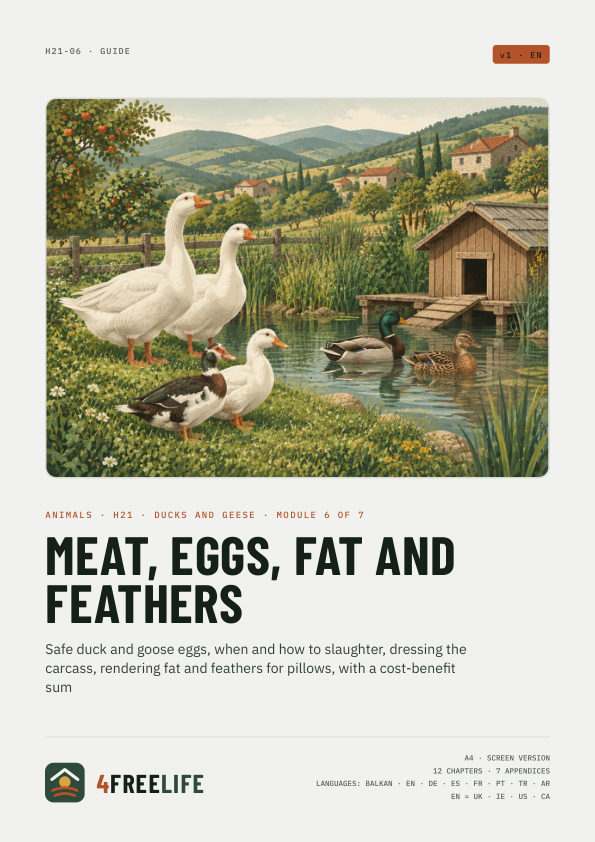
Safe duck and goose eggs, when and how to slaughter, dressing the carcass, rendering fat and feathers for pillows, with a cost-benefit sum
Secure checkout with Stripe · VAT included · The PDFs are in the language of this page.
Whole series: Ducks and geese, €39
In short
- Ducks lay early in the morning: keep them shut in until 9 am and collect the eggs at once.
- Eat duck and goose eggs only thoroughly cooked, no raw custards or mayonnaise.
- Pekins are killed at 7–9 weeks, geese in autumn at 5–7 months, before or after the moult.
- Chill the carcass below 4 °C (40 °F) within a few hours; cook the meat to 74 °C (165 °F) in the centre.
- Render fat over a low heat, strain it and keep it in the fridge or freezer, without raw garlic or onion.
- Feathers only from dead birds or the natural moult. We don't pluck live birds.
What's inside
Chapters
- Eggs: collecting and cleanliness
- Egg safety and storage
- Meat: which birds and when
- Slaughter in brief
- Plucking and dressing
- Fat and crackling
- Feathers and down
- Offal: nothing wasted
- Manure and compost
- Plan and value
- Common mistakes
- Printable checklist
Worksheets
- Yield calculator
- Cost-benefit calculator
- Egg record
- Slaughter and meat record
- Fat and feather log
- Freezer and jar labels
- Egg, meat, fat and feather calendar
Fields and checkboxes can be filled in with Adobe Acrobat Reader (desktop and mobile), and the calculator adds up by itself. Filling in may not work in some browsers. A print version comes with the screen PDF.
This guide in other languages: