
← Goats
H25-07 · Module 7 of 7 · Pages: 18 · Worksheets: 6
Milk, cheese and meat
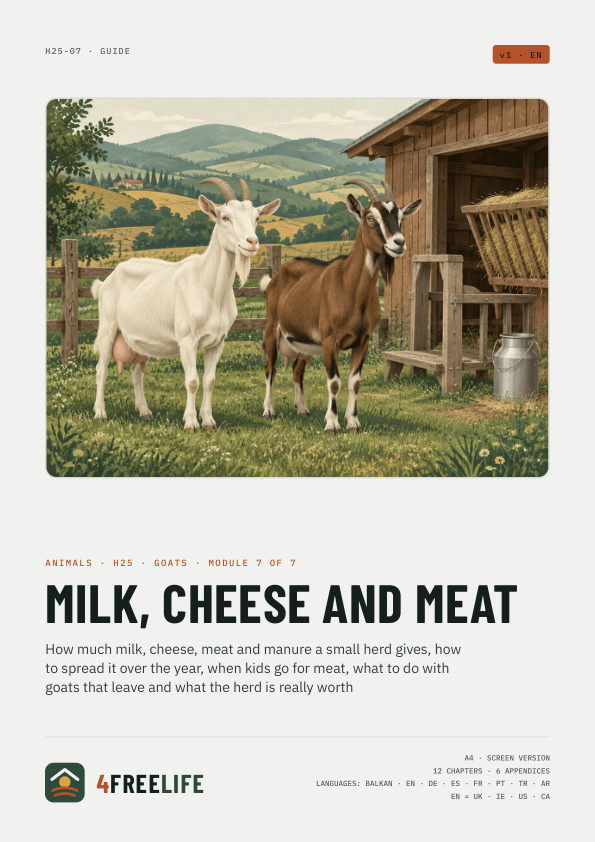
How much milk, cheese, meat and manure a small herd gives, how to spread it over the year, when kids go for meat, what to do with goats that leave and what the herd is really worth
€9
Secure checkout with Stripe · VAT included · The PDFs are in the language of this page.
Whole series: Goats, €39
In short
- A good dairy goat gives roughly 500 L of milk, 15 kg of meat (kids) and half a tonne of manure a year.
- The spring surplus goes into cheese: 6 L of milk makes roughly 1 kg of fresh cheese, 9–10 L roughly 1 kg of hard cheese.
- Boil or pasteurise milk for drinking and for fresh cheese. Children and pregnant women don't eat raw-milk cheese.
- Kids for roasting at roughly 8–12 weeks, grown-on kids at 4–6 months; meat yield roughly 45–55 % of live weight.
- Slaughter and the sale of meat and cheese are regulated. A goat on medicine doesn't go for slaughter until the withdrawal period is over.
- Every year 20–25 % of the herd is replaced: the best doelings stay, weak goats leave.
What's inside
Chapters
- What the herd gives in a year
- Milk through the year
- Safe milk and cheese in the kitchen
- Goat milk products
- Kids for meat
- Slaughter and the rules
- Kid and goat meat in the kitchen
- Skins, horns and manure
- Selling and value
- Which goats stay and which leave
- Common mistakes
- Printable checklist
Worksheets
- Milk plan for the year
- Cheese and dairy calculator
- Meat plan
- Production record
- Yearly herd costs and value
- Product calendar
Fields and checkboxes can be filled in with Adobe Acrobat Reader (desktop and mobile), and the calculator adds up by itself. Filling in may not work in some browsers. A print version comes with the screen PDF.
This guide in other languages: