
← Milk
H40-04 · Module 4 of 7 · Pages: 21 · Worksheets: 6
Fresh cheese and brined cheese
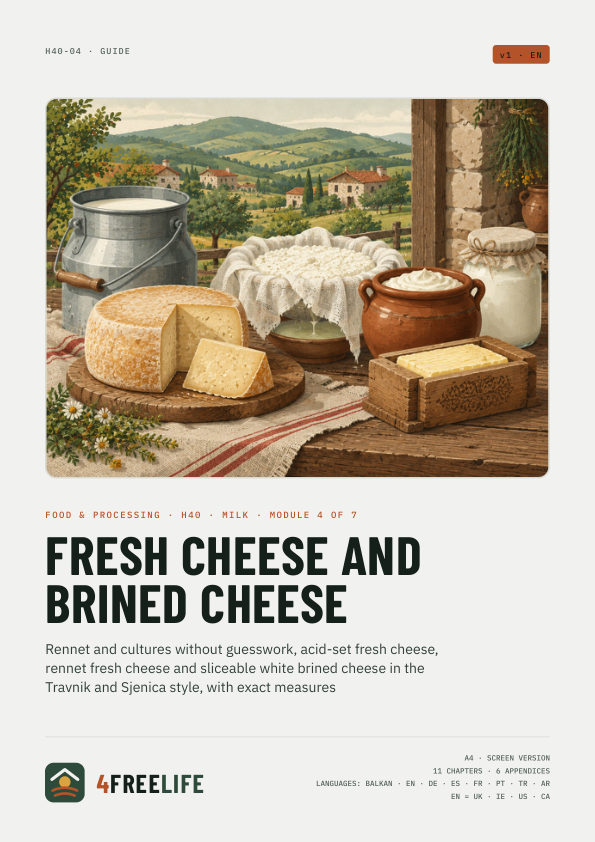
Rennet and cultures without guesswork, acid-set fresh cheese, rennet fresh cheese and sliceable white brined cheese in the Travnik and Sjenica style, with exact measures
€9
Secure checkout with Stripe · VAT included · The PDFs are in the language of this page.
Whole series: Milk, €39
In short
- Fresh cheese is made from pasteurised milk (63 °C / 145 °F for 30 min), with a culture and calcium chloride.
- Rennet: roughly 0.2–0.3 mL per 1 L of standard-strength liquid rennet, diluted in cold boiled water.
- 6–7 L of cow's milk gives roughly 1 kg of fresh cheese; sheep milk almost twice as much.
- Sliceable brined cheese is dry-salted and ripened in 8–10 % brine at 12–15 °C (54–59 °F), then somewhere cold.
- Pregnant women and young children: only cheese from pasteurised milk, fresh and kept cold, or baked hot in a dish.
What's inside
Chapters
- How cheese forms
- Rennet
- Cultures and calcium chloride
- The clean-break test and cutting
- Recipe: acid-set fresh cheese
- Recipe: fresh rennet cheese
- Sliceable brined cheese: Travnik and Sjenica style
- Soft cheese safety
- When something goes wrong
- Common mistakes
- Printable checklist
Worksheets
- Fresh and white cheese calendar
- Cheese yield calculator
- Rennet and salt calculator
- Cheese batch diary
- Brined cheese ripening record
- Cheese and equipment inventory
Fields and checkboxes can be filled in with Adobe Acrobat Reader (desktop and mobile), and the calculator adds up by itself. Filling in may not work in some browsers. A print version comes with the screen PDF.
This guide in other languages: