
← Fruit
H44-05 · Module 5 of 7 · Pages: 19 · Worksheets: 6
Dried fruit
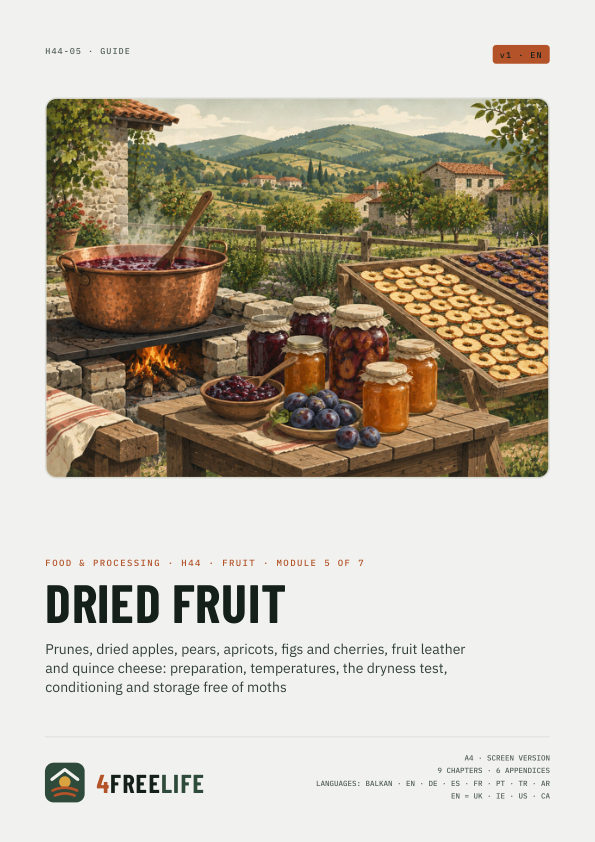
Prunes, dried apples, pears, apricots, figs and cherries, fruit leather and quince cheese: preparation, temperatures, the dryness test, conditioning and storage free of moths
€9
Secure checkout with Stripe · VAT included · The PDFs are in the language of this page.
Whole series: Fruit, €39
In short
- Fruit is dried at 55–65 °C (130–150 °F) in a dryer, with a steady flow of air. Higher temperatures "case-harden" the surface and leave the inside moist.
- Dip pale fruit (apples, pears, apricots) in water with vitamin C before drying, so it doesn't brown.
- Finished fruit is leathery and pliable, with no drop of moisture when you cut and squeeze it. Apple crisps are brittle.
- Conditioning for 7–10 days in a closed jar shows up fruit that isn't dry enough.
- Against moths and weevils: 48 hours in the freezer, then into well-sealed jars, somewhere cool and dark.
What's inside
Chapters
- Dried fruit at a glance
- Which fruit and which varieties
- Preparation: washing, cutting, colour
- Drying in a dryer and in the oven
- When fruit is dry
- Conditioning and storage
- Fruit leather, quince cheese and hošaf
- Common mistakes
- Printable checklist
Worksheets
- Drying calendar
- Yield and electricity calculator
- Date calculator and my measurements
- Drying diary
- Dried fruit inventory
- Labels for jars and bags
Fields and checkboxes can be filled in with Adobe Acrobat Reader (desktop and mobile), and the calculator adds up by itself. Filling in may not work in some browsers. A print version comes with the screen PDF.
This guide in other languages: