
← Cellars, clamps and earth pits
H50-05 · Module 5 of 7 · Pages: 18 · Worksheets: 5
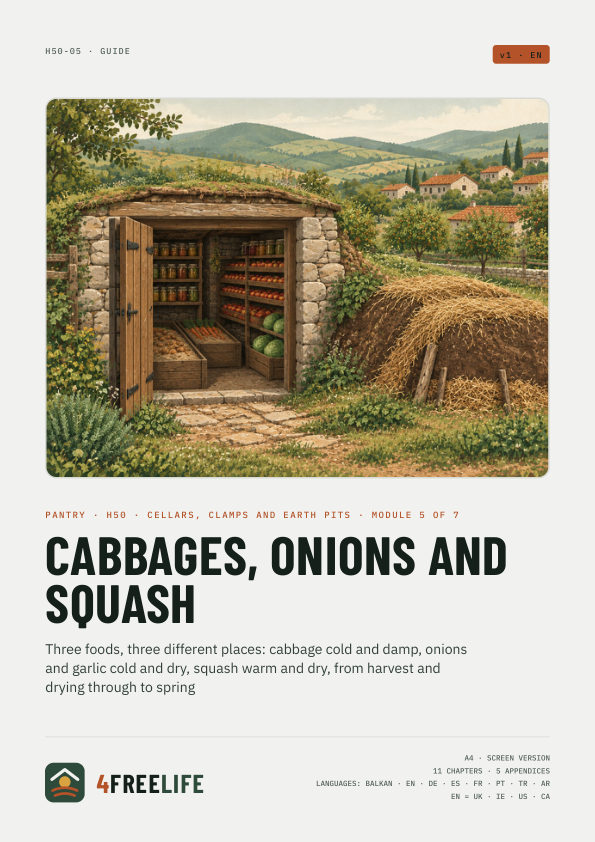
Cabbages, onions and squash
Three foods, three different places: cabbage cold and damp, onions and garlic cold and dry, squash warm and dry, from harvest and drying through to spring
€9
Secure checkout with Stripe · VAT included · The PDFs are in the language of this page.
Whole series: Cellars, clamps and earth pits, €39
In short
- Cabbage: late, firm heads, 2–3 wrapper leaves, 0–2 °C and 90–95 % humidity, hung up or in a single layer.
- Onions and garlic: dry for 2–3 weeks until the neck is dry and thin, then dry, 0–4 °C, 60–70 % humidity.
- Squash: ripe, with the stalk, cured warm for 1–2 weeks, then 10–15 °C (50–59 °F), dry, in a single layer.
- A bitter squash or pumpkin is not eaten or fed to stock: it can be poisonous.
- Garlic in oil must not be kept at room temperature: risk of botulism.
What's inside
Chapters
- Three foods, three places
- Cabbage: harvest and preparation
- Cabbage in the cellar
- Onions: harvest and drying
- Garlic
- Squash and pumpkins: harvest and curing
- Squash: storing and checking
- When it starts to spoil: deciding
- How much and where in the house
- Common mistakes
- Printable checklist
Worksheets
- Stock and garden calculator
- Date calculator from harvest
- Cabbage, onion and squash calendar
- Squash register
- Cabbage and onion inventory
Fields and checkboxes can be filled in with Adobe Acrobat Reader (desktop and mobile), and the calculator adds up by itself. Filling in may not work in some browsers. A print version comes with the screen PDF.
This guide in other languages: