
← Fermentation and pickling
H54-01 · Module 1 of 7 · Pages: 21 · Worksheets: 6
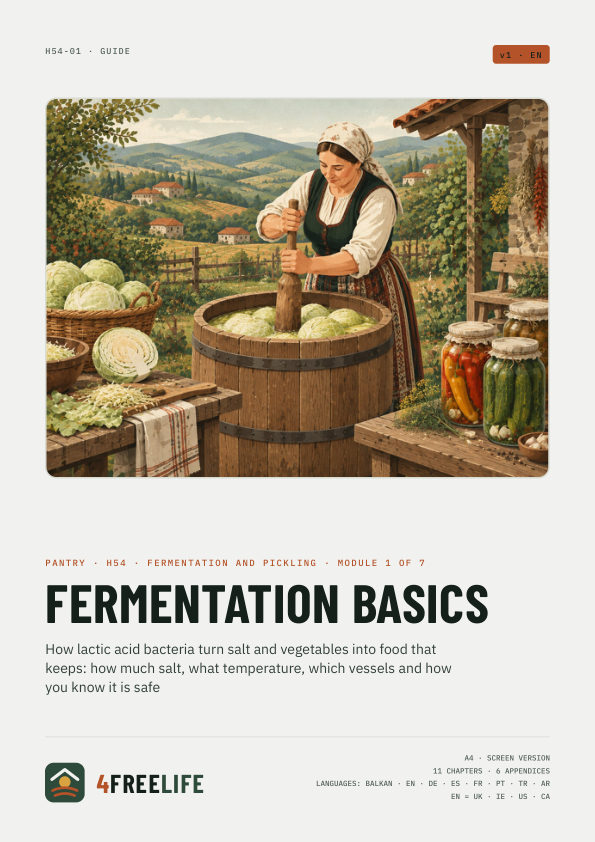
Fermentation basics
How lactic acid bacteria turn salt and vegetables into food that keeps: how much salt, what temperature, which vessels and how you know it is safe
€9
Secure checkout with Stripe · VAT included · The PDFs are in the language of this page.
Whole series: Fermentation and pickling, €39
In short
- Salt is weighed: for sauerkraut 2–2.5 % of the weight of the vegetables (20–25 g per 1 kg), for cucumbers in brine 40–50 g per litre of water.
- The best starting temperature is 18–22 °C (64–72 °F). Below 15 °C fermentation stalls, above 24 °C the vegetables go soft.
- Vegetables always under the brine. Anything that sticks out above the liquid spoils.
- The goal is pH below 4.6 by day 4 (18–22 °C), and 4.0 or lower for the finished product. If it still isn't below 4.6 on day 7, throw it out. Measure with a strip.
- Only vessels of glass, ceramic without lead glaze, wood, stainless steel or food-grade plastic. Never aluminium or galvanised metal.
What's inside
Chapters
- What fermentation is and where to find it
- How lactic acid fermentation works
- Salt: how much and which kind
- Temperature and time
- No air: submerging and weighting
- Vessels and equipment
- Hygiene and starters
- pH: how you know it is sour enough
- Storing the finished product
- Common mistakes
- Printable checklist
Worksheets
- Fermentation calendar
- Salt calculator
- First batch plan
- Batch log
- Equipment and shopping
- Labels
Fields and checkboxes can be filled in with Adobe Acrobat Reader (desktop and mobile), and the calculator adds up by itself. Filling in may not work in some browsers. A print version comes with the screen PDF.
This guide in other languages: