
← Cooling without electricity
H57-04 · Module 4 of 7 · Pages: 19 · Worksheets: 5
The clay pot cooler (zeer)
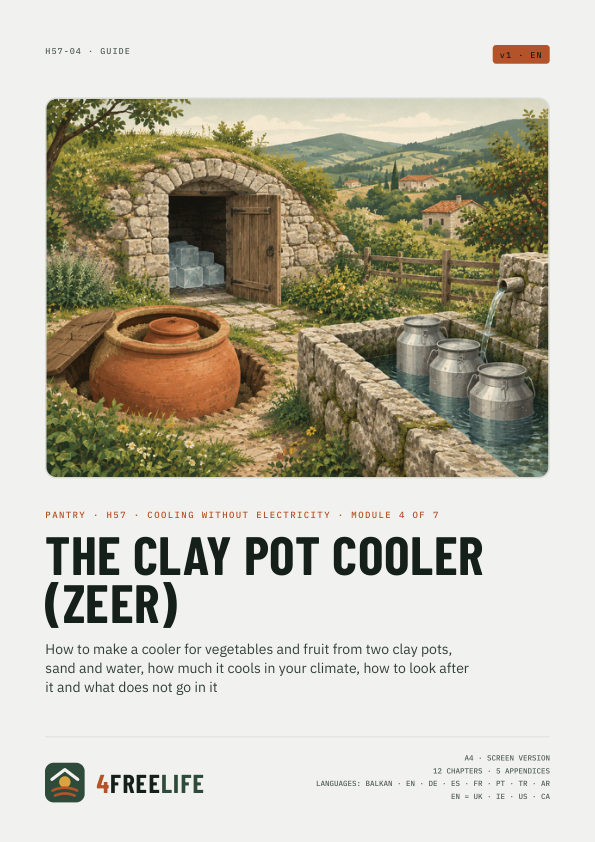
How to make a cooler for vegetables and fruit from two clay pots, sand and water, how much it cools in your climate, how to look after it and what does not go in it
€9
Secure checkout with Stripe · VAT included · The PDFs are in the language of this page.
Whole series: Cooling without electricity, €39
In short
- A clay pot cooler cools by evaporation. It works best on a dry, warm, breezy day, in the shade.
- On a dry day it gives roughly 5–8 °C less than the air (more in a dry continental climate); on a muggy day only 1–3 °C. In a damp UK or Irish summer, often 2–4 °C. Inside, the air is humid, so vegetables do not wilt.
- For vegetables, fruit and leafy greens: roughly 2–3 times longer than on the kitchen table.
- Not for meat, milk, fresh cheese or cooked food. They need 0–4 °C (H57-01).
- The outer pot must be unglazed. Food must not touch glaze of unknown origin (lead).
- Water the sand 1–3 times a day, and every 2–4 weeks empty the cooler and dry it in the sun.
What's inside
Chapters
- How a clay pot cooler works
- How much it cools in your climate
- What goes in the cooler and what does not
- Pots and materials
- Making it step by step
- Placing it and daily care
- A larger cooler: the brick chamber
- Cleanliness, mould and mosquitoes
- A clay cooler for water and drinks
- Safety
- Common mistakes
- Printable checklist
Worksheets
- Sand, water and cost calculator
- My pot sizes
- Test log
- What is in the cooler
- The clay pot cooler season
Fields and checkboxes can be filled in with Adobe Acrobat Reader (desktop and mobile), and the calculator adds up by itself. Filling in may not work in some browsers. A print version comes with the screen PDF.
This guide in other languages: