
← Vegetables
H43-01 · Module 1 of 7 · Pages: 22 · Worksheets: 6
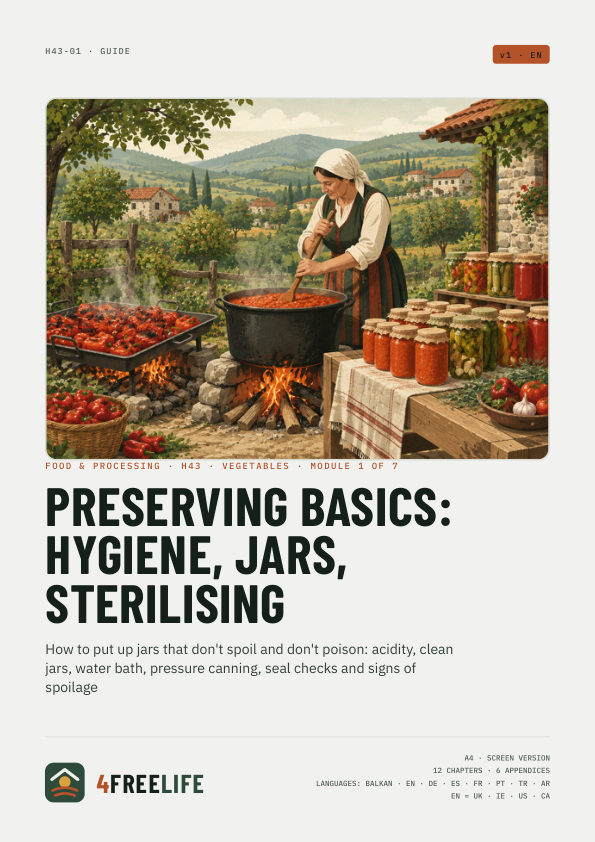
Preserving basics: hygiene, jars, sterilising
How to put up jars that don't spoil and don't poison: acidity, clean jars, water bath, pressure canning, seal checks and signs of spoilage
Secure checkout with Stripe · VAT included · The PDFs are in the language of this page.
Whole series: Vegetables, €39
In short
- The line is pH 4.6. More acidic than that may go in a boiling-water bath; low-acid vegetables need a pressure canner or added acid.
- A boiling-water bath is not sterilisation. Botulism spores survive 100 °C (212 °F); only acid keeps them in check.
- Work from a tested recipe: the amount of vinegar, the jar size and the time are not changed "by eye".
- Check every jar 12–24 hours after processing: the lid must be pulled down and must not "click".
- A bulging lid, foam, cloudy or foul-smelling contents mean: don't taste it, dispose of it safely.
What's inside
Chapters
- Why preserves spoil
- Acid and low-acid vegetables
- Hygiene: clean worktop, clean hands, clean vegetables
- Jars, lids and equipment
- Preparing jars before filling
- Filling and closing
- Three ways to process jars
- Cooling, checking and storing
- Signs of spoilage and botulism
- What's where in the H43 series
- Common mistakes
- Printable checklist
Worksheets
- Hygiene checklist
- Season and preserving calendar
- Jar and vegetable calculator
- Batch log
- Jar inventory
- Jar labels
Fields and checkboxes can be filled in with Adobe Acrobat Reader (desktop and mobile), and the calculator adds up by itself. Filling in may not work in some browsers. A print version comes with the screen PDF.
This guide in other languages: